Ever wondered what the first screw pile installed in Australia was? We have, so we searched and found the answer.
Cape Jaffa Lighthouse in South Australia.
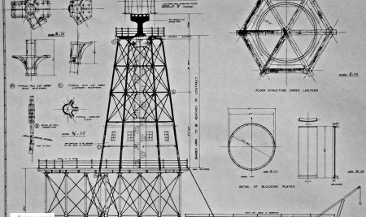
The Cape Jaffa Lighthouse commenced building in 1868 and opened on 24th January 1872. It stood 41 metres (134ft) high 8km’s out to sea on the Margaret Brock Reef.
Percy Wells submitted a tender to the South Australian Government for the construction of the Lighthouse, utilising Alexander Mitchell’s innovative screw pile technology. Acting as an agent for the English marine engineering firm Wells Brothers, Percy represented the company in this endeavour. His brother, George Wells, was both a proprietor of the firm and a licensee of Mitchell’s screw pile patent. Alexander Mitchell is widely recognised as the inventor of the screw pile lighthouse.
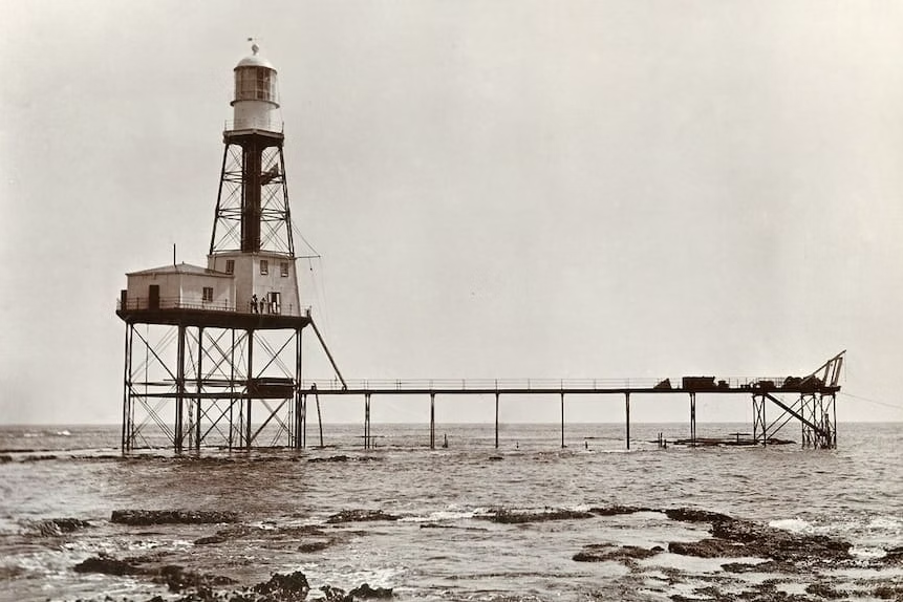
The tender was approved, and the project received authorisation from the South Australian Government. However, challenges soon arose with the tender pricing, as the number of calm days available to operate heavy machinery at sea had been significantly miscalculated. What was initially planned as a one-year project ultimately extended to three years. As a result of this miscalculation, the contractor faced severe financial strain and was eventually declared bankrupt.
For 101 years, the Cape Jaffa Lighthouse operated continuously, guiding vessels safely past the Margaret Brock Reef. Its lantern was visible from a distance of up to 40 kilometres, providing a vital navigational aid to mariners throughout its service.
The Federal Government decommissioned the lighthouse in March 1973 and gifted it to the National Trust of South Australia. The lighthouse was moved and reconstructed to Marine Parade, Kingston in 1974 by the Kingston South East National Trust. It opened on 24th January 1976 as a museum.
Information and photos taken from the Cape Jaffa Lighthouse website